
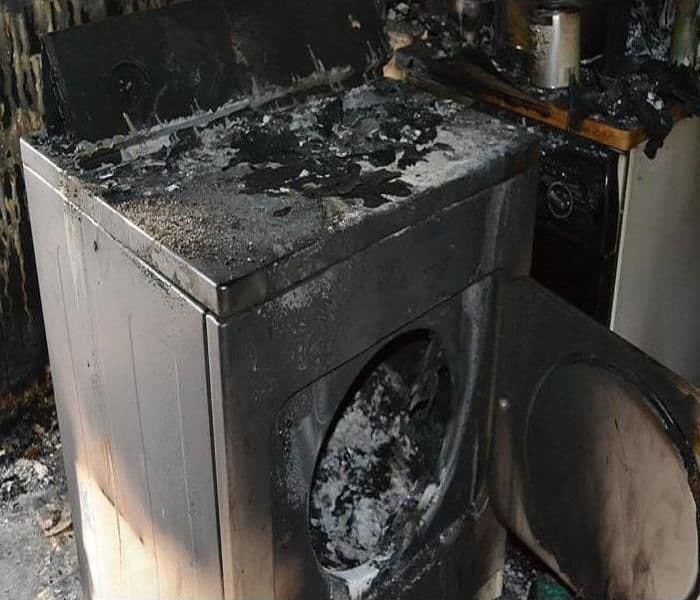
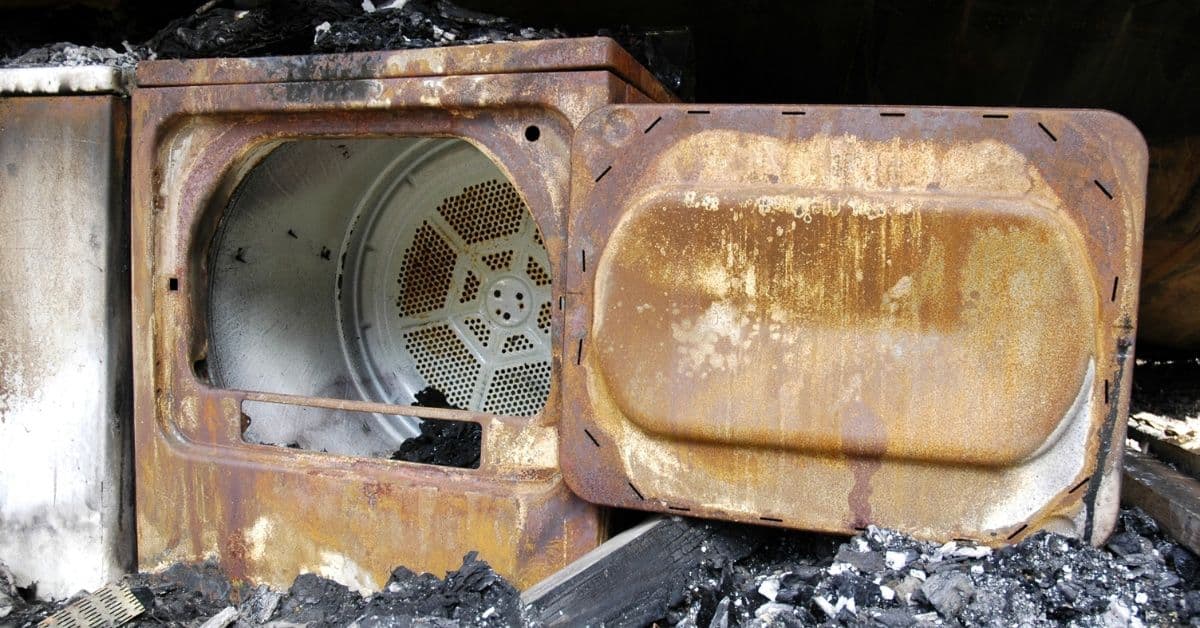
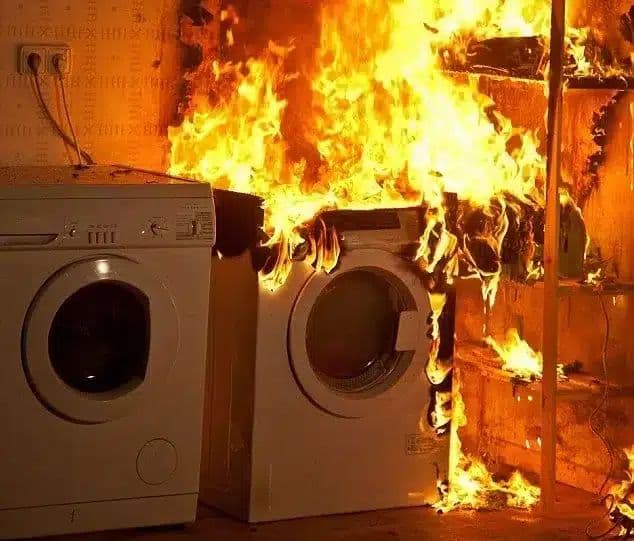
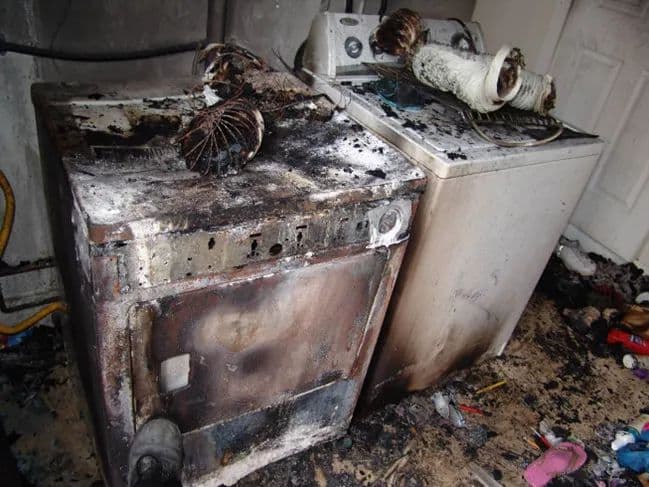
Critical Fact: Dryer fires are the leading cause of home appliance fires in the US, causing $233M in property damage annually. Nearly all dryer fires are completely preventable with regular professional cleaning.
🔥Causes of Dryer Fires
Dryer fires typically occur when lint — which is highly flammable — accumulates in the dryer, exhaust hose, and vent duct. This lint can ignite from the heat generated during normal drying cycles, particularly when airflow is restricted.
- 1Failure to clean the dryer vent (the #1 cause — 34% of all dryer fires)
- 2Lint buildup inside the dryer housing and around the heating element
- 3Crushed or kinked flexible vent hose behind the dryer
- 4Bird nests or debris blocking the exterior exhaust cap
- 5Using plastic or foil flexible duct instead of rigid metal
- 6Dryer vent that is too long or has too many 90° turns
⚠️Warning Signs Your Dryer Needs Attention
⚡ Act Immediately If You Notice: A burning smell during operation, clothes that are unusually hot after a cycle, or the dryer exterior becoming very hot to the touch. These indicate dangerously restricted airflow.
- 1Clothes take more than one cycle to dry completely
- 2Clothes feel hotter than usual at the end of the cycle
- 3The dryer exterior becomes unusually hot to the touch
- 4You notice a burning smell during or after operation
- 5The laundry room becomes humid or muggy while drying
- 6Excess lint accumulating around the dryer or on clothing
- 7The dryer shutting off automatically before the cycle ends
🛡️Dryer Fire Prevention Tips
- ✓Clean the lint screen before or after every single load
- ✓Have your dryer vent professionally cleaned at least once a year
- ✓Inspect the exterior vent flap regularly for obstructions
- ✓Use rigid or semi-rigid metal duct — never plastic flex duct
- ✓Keep the area around the dryer clear of flammable materials
- ✓Never run the dryer when you're away from home or asleep
- ✓Don't dry items stained with flammable substances (gas, oil, etc.)
- ✓Install a smoke detector in or near the laundry room
📅Recommended Maintenance Schedule
Clean the lint screen
Professional vent cleaning
High-use households + families
🛡️ Is Your Dryer Vent Overdue?
If you can't remember the last time your dryer vent was professionally cleaned, it's overdue. Our same-day service makes it easy to protect your home today.